Why is a Richard Mille so expensive? Five reasons, checked
Analysts estimate the average Richard Mille sold for around CHF 294,000 in 2025. We looked at where that money goes: the cases, the materials, the engineering, the scarcity and the marketing.
Richard Mille is a young brand with prices to match the oldest names in watchmaking. According to estimates by Morgan Stanley and the consultancy LuxeConsult, published in February 2026, the brand had a turnover of about CHF 1.75 billion in 2025 from roughly 5,950 watches. Divide one by the other and you get an average of around CHF 294,000 per watch.
Two caveats before we start. These are analysts' estimates, not figures reported by the brand, and the Swatch Group has publicly disputed the accuracy of the report. And an average hides a wide range: some models cost far less, and limited editions cost far more.
So where does the money go? The usual explanation comes in five parts. Here is what holds up.
Where it started
The first watch, the RM 001 Tourbillon, was introduced in 2001 in an initial series of 17 pieces, according to the brand. Richard Mille, then at the jeweller Mauboussin, developed it with his friend Dominique Guenat, owner of the case maker Montres Valgine. The brand says the two met in 1988. Our Instagram post dated the start of the project to 1998; we could not confirm that year in the sources we read, so we leave it out.
1. The case
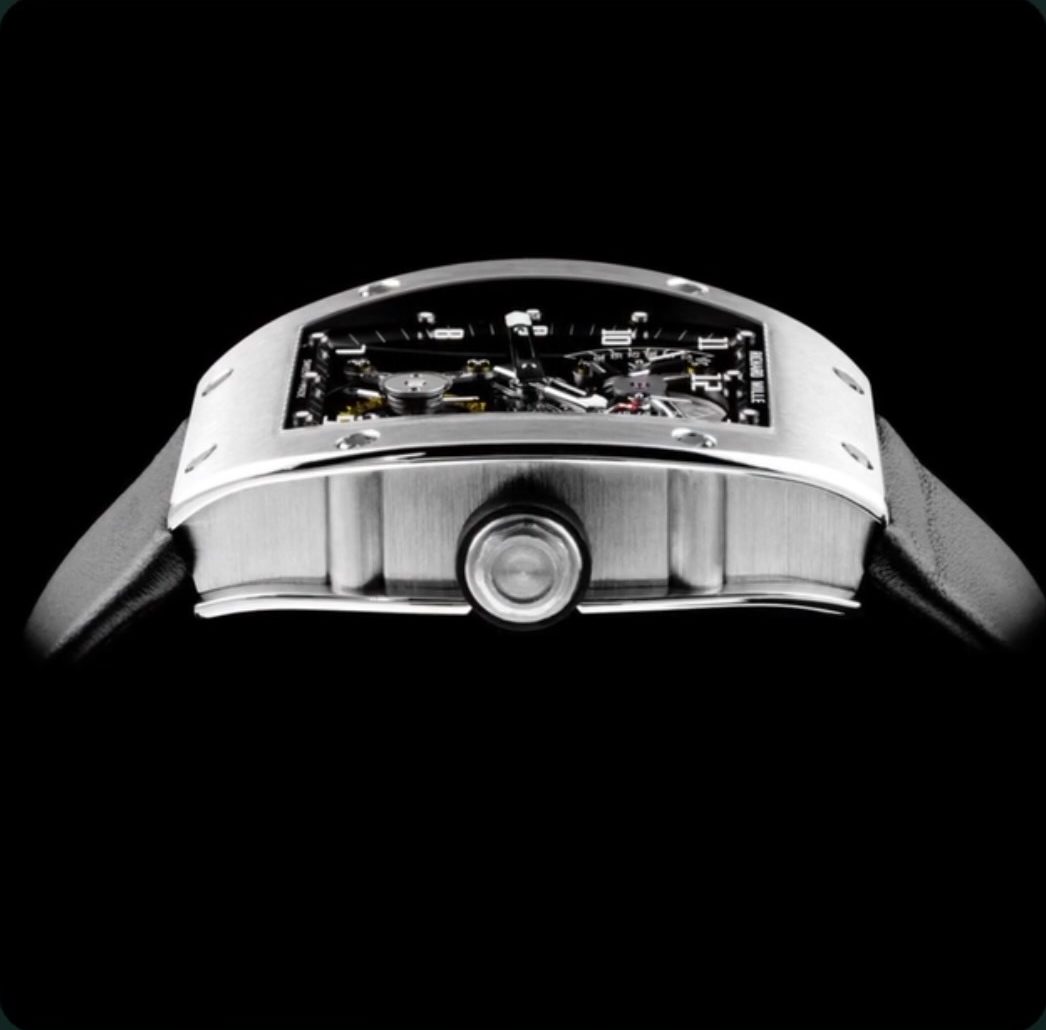
Most Richard Mille cases are tonneau-shaped and made in three parts: front bezel, caseband and caseback. The brand says machining a case can take several months and hundreds of operations, with cutting tools made largely by hand to tolerances of a few microns.
Our post gave a precise figure of plus or minus 2 microns. We did not find that number on the brand's pages, so we cannot confirm it.
2. The materials
Carbon TPT is built from thin layers of carbon filaments, each about 30 microns thick, with the fibre direction shifted by 45 degrees every two layers. A Richard Mille R&D manager told Hypebeast you would need about 30 layers to make one millimetre. The often-quoted figure of 600 layers does not appear in the sources we read, so we drop it.
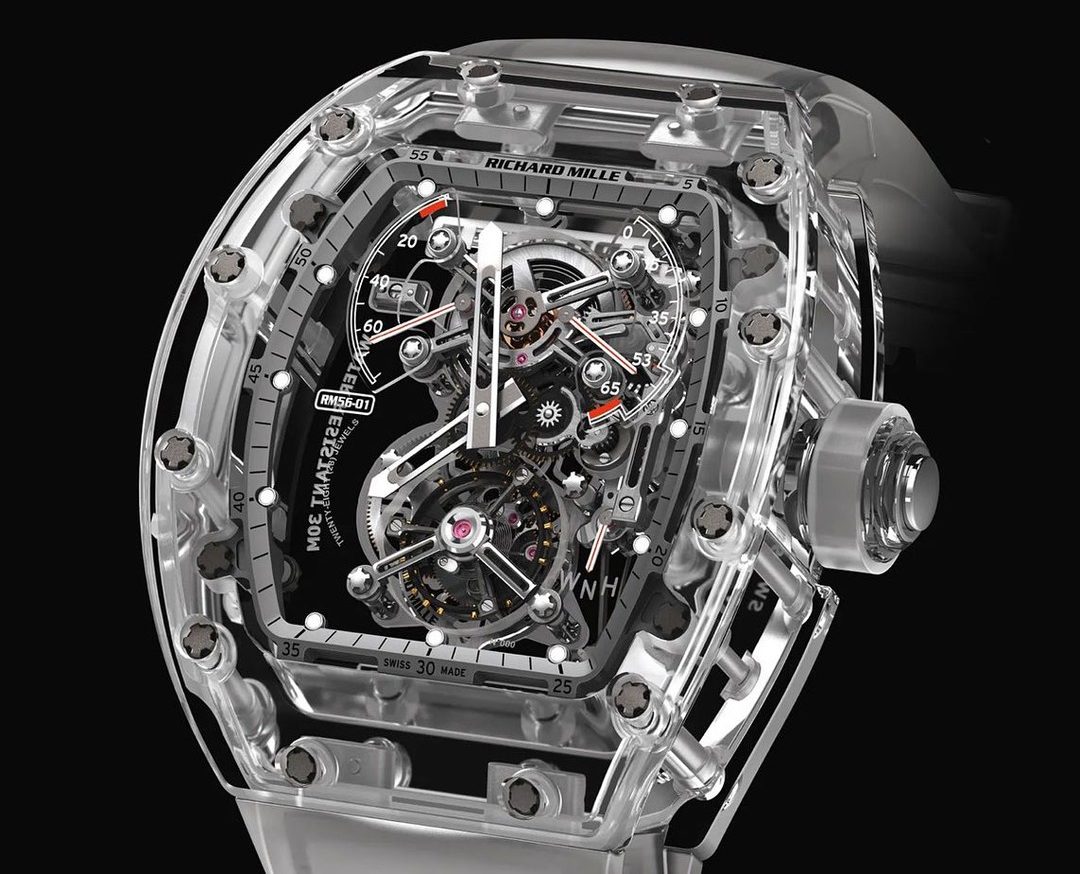
Sapphire is where the hours pile up. For the RM 56-01 of 2013, a limited edition of five, the brand says one case required more than 40 days of machining, 24 hours a day. For the RM 75-01 of 2025, the brand's press release speaks of over 1,000 hours to extract a three-part case, including 40 days of round-the-clock grinding. The sapphire also has to be grown first, and the brand's own pages disagree on how long that takes: more than four weeks on one page, more than 12 on another.
3. The engineering
The clearest example is the tennis watches made for Rafael Nadal. The figures in our post belong to the latest one, the RM 27-05 Flying Tourbillon (2023): 11.5 grams without the strap, a movement of 3.79 grams, and shock resistance beyond 14,000 g, according to the brand. It is a limited edition of 80.
Its predecessor, the RM 27-04 (2020), weighed 30 grams with its strap and was rated at more than 12,000 g. SJX put its price at about one million US dollars before tax.
Nadal has worn the brand on court since 2010, according to the RM 27-05 page, which speaks of 14 years. The brand's own history page lists the first Nadal watch, the RM 027, under 2009, so its sources do not quite agree.
4. The scarcity
The analysts' estimate of around 5,950 watches in 2025, up from 5,700 the year before, compares with about 1.15 million for Rolex. Even so, Richard Mille ranked sixth among Swiss brands by turnover. Low volume and very high prices are the business model, not an accident.
5. The marketing
The brand's partners wear the watches while they compete, as Nadal did. That is costly engineering, and it is also advertising that money cannot easily buy any other way. How much of the price it explains is impossible to measure from outside.
Our take
The engineering is real and documented: very light watches, unusual materials, sapphire cases that take weeks to machine. But a tourbillon and a carbon case do not add up to CHF 294,000 on their own. The rest is scarcity and status, which the brand manages deliberately.
Whether that is worth it depends on what you are buying: a piece of engineering, or a signal. Much of the price pays for the second.
Sources
Every fact in this article comes from the sources below. Spotted a mistake? Tell us on Instagram.
- The Hour Markers: Morgan Stanley And LuxeConsult's Top 50 Swiss Watch Brands For 2025 (opens in a new tab)
- Revolution: What we can learn from Morgan Stanley's Ninth Annual Swiss Watch Report (opens in a new tab)
- Monochrome Watches: Morgan Stanley's 2025 Top 50 Watch Brands Report: Rolex Leads Amid Rising Market Polarisation (opens in a new tab)
- Richard Mille: Brand history (opens in a new tab)
- Richard Mille: Watchcase (opens in a new tab)
- Richard Mille: Watch manufacturing (opens in a new tab)
- Richard Mille: RM 56-01 Tourbillon Sapphire (opens in a new tab)
- Europa Star: Richard Mille's first movement for sapphire case in the RM 75-01 (opens in a new tab)
- Richard Mille: RM 35-01 Rafael Nadal (opens in a new tab)
- Hypebeast: What the Tech? Richard Mille's TPT Case Material Also Makes the World's Fastest Sailboats (opens in a new tab)
- Richard Mille: RM 27-04 Tourbillon Rafael Nadal (opens in a new tab)
- SJX Watches: Richard Mille Introduces the RM 27-04 Tourbillon Rafael Nadal (opens in a new tab)
- Richard Mille: RM 27-05 Flying Tourbillon Rafael Nadal (opens in a new tab)