How the Omega Speedmaster became the Moonwatch
It was designed in 1957 for racing drivers and engineers. Eight years later it was the only watch to survive NASA's eleven tests, and in 1969 it was on Buzz Aldrin's wrist on the Moon.
The most famous space watch in history was not made for space. When Omega launched the Speedmaster in 1957, it was aimed at racing drivers and engineers. Twelve years later it was on the Moon.
This is how it got there, and what the story usually gets wrong.
1957: a chronograph for the racetrack
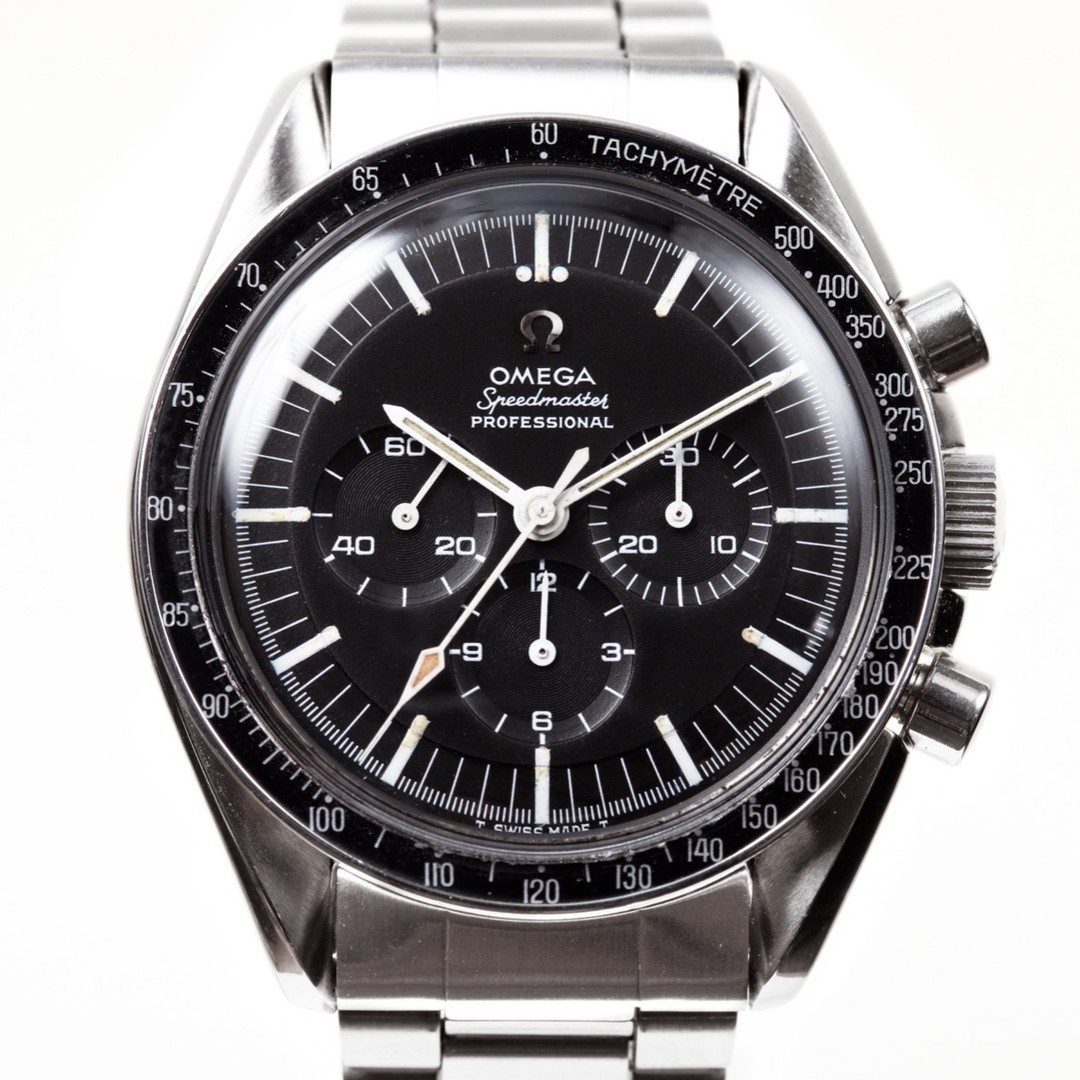
The first Speedmaster, reference CK 2915, arrived in 1957 alongside two other professional watches, the Seamaster 300 and the Railmaster. It had a case of about 39 mm, the hand-wound calibre 321 inside, and one detail that set it apart: the tachymeter scale, used to calculate speed, was moved from the dial to the bezel.
Space was not part of the plan.
1962: the first Speedmaster in orbit
The astronauts got there before NASA did. On 3 October 1962, Wally Schirra wore his own Speedmaster, a reference CK 2998, on the Mercury-Atlas 8 mission. It completed six orbits with him.
It was a private purchase, not official equipment. That came later.
1964: NASA goes shopping
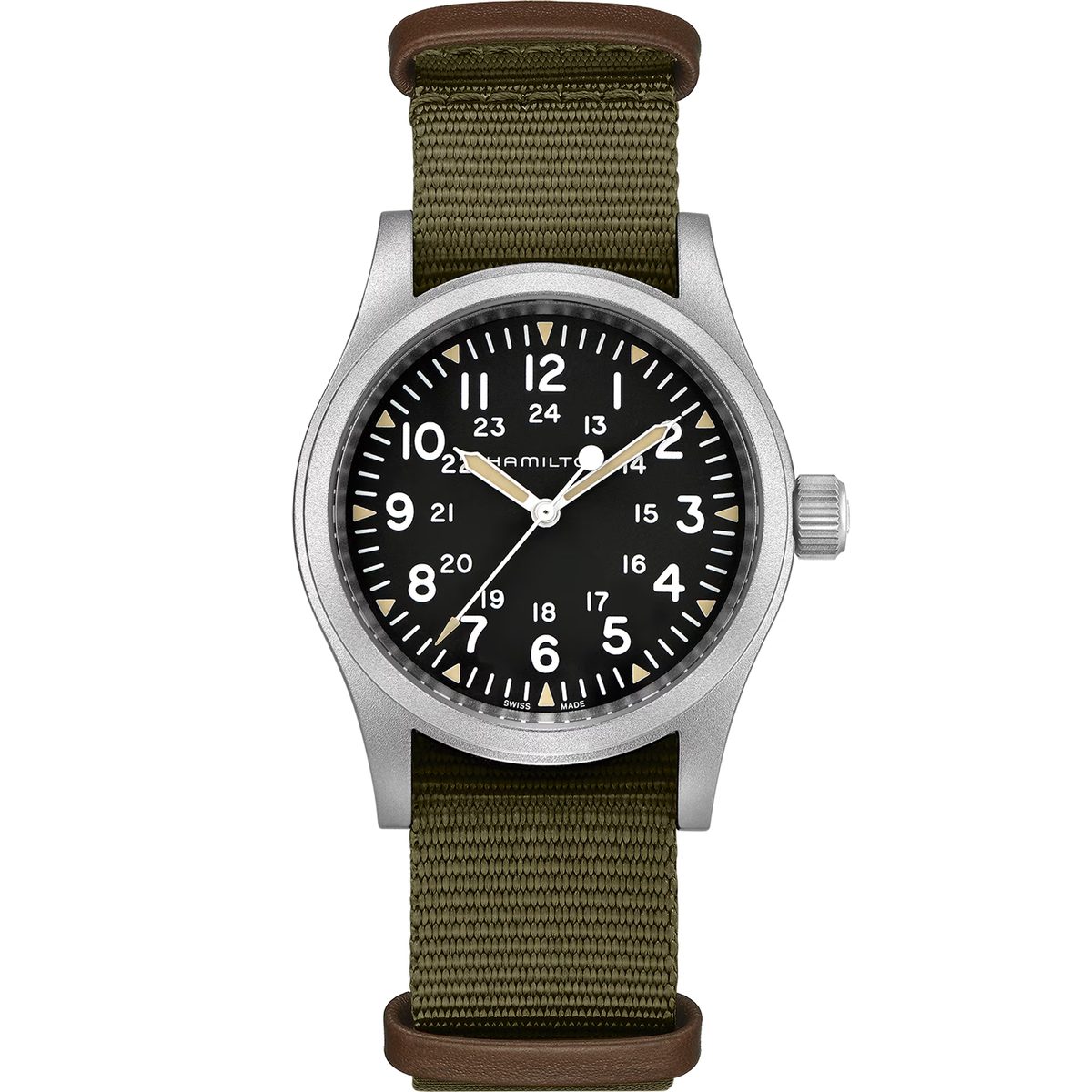
In September 1964, NASA set out to find a wrist chronograph it could issue to its crews. Engineer James Ragan sent a request to about ten manufacturers. Four answered: Rolex, Longines-Wittnauer, Hamilton and Omega. Hamilton sent a pocket watch and was ruled out straight away.
That left three chronographs to test: a Rolex, a Longines-Wittnauer and an Omega Speedmaster reference 105.003.
The eleven tests
The watches were not judged on looks. They went through eleven tests designed to break them:
- High temperature: 48 hours at 70 °C, then 30 minutes at 93 °C.
- Low temperature: four hours at -18 °C.
- Vacuum, with heating and cooling cycles.
- Humidity: ten 24-hour cycles at more than 95% humidity.
- Corrosion: 48 hours in an oxygen atmosphere at 70 °C.
- Shock: six shocks of 40 g.
- Acceleration: up to 7.25 g, then 16 g.
- Low pressure.
- High pressure: 1.6 atmospheres for an hour.
- Vibration: from 5 to 2,000 Hz at 8.8 g.
- Noise: 130 decibels for 30 minutes.
The Rolex stopped during the humidity test and failed again at high temperature. The crystal of the Longines-Wittnauer warped in the heat. Only the Speedmaster passed.
The tests were completed in March 1965. On 23 March the Speedmaster flew on Gemini 3 with Gus Grissom and John Young, and on 1 June 1965 it was formally qualified. NASA's word matters here: the watch was flight-qualified, not “certified”.
1965: the first American spacewalk
Two days after that qualification, on 3 June 1965, Ed White stepped out of Gemini 4 for the first American spacewalk wearing Speedmasters, reference 105.003.
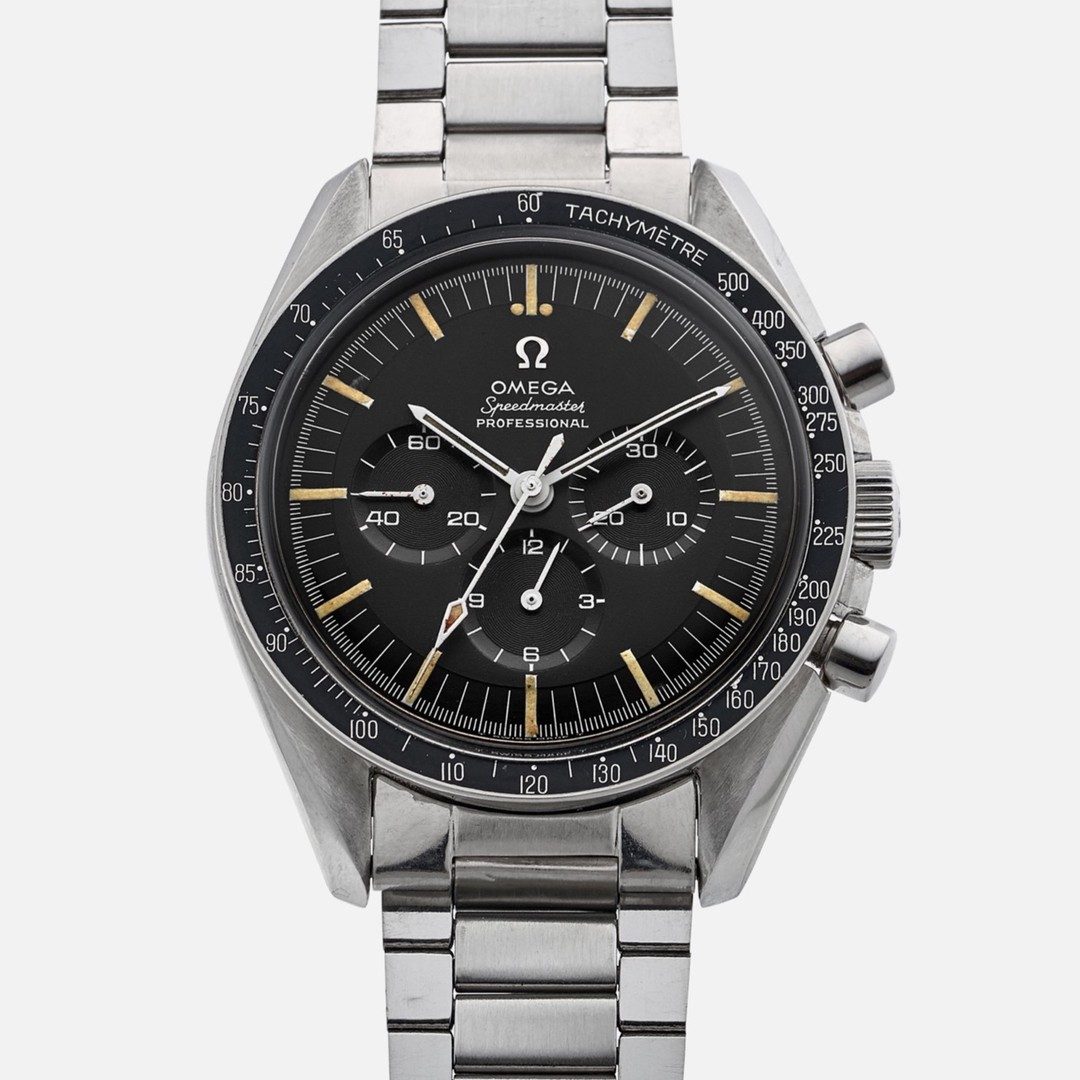
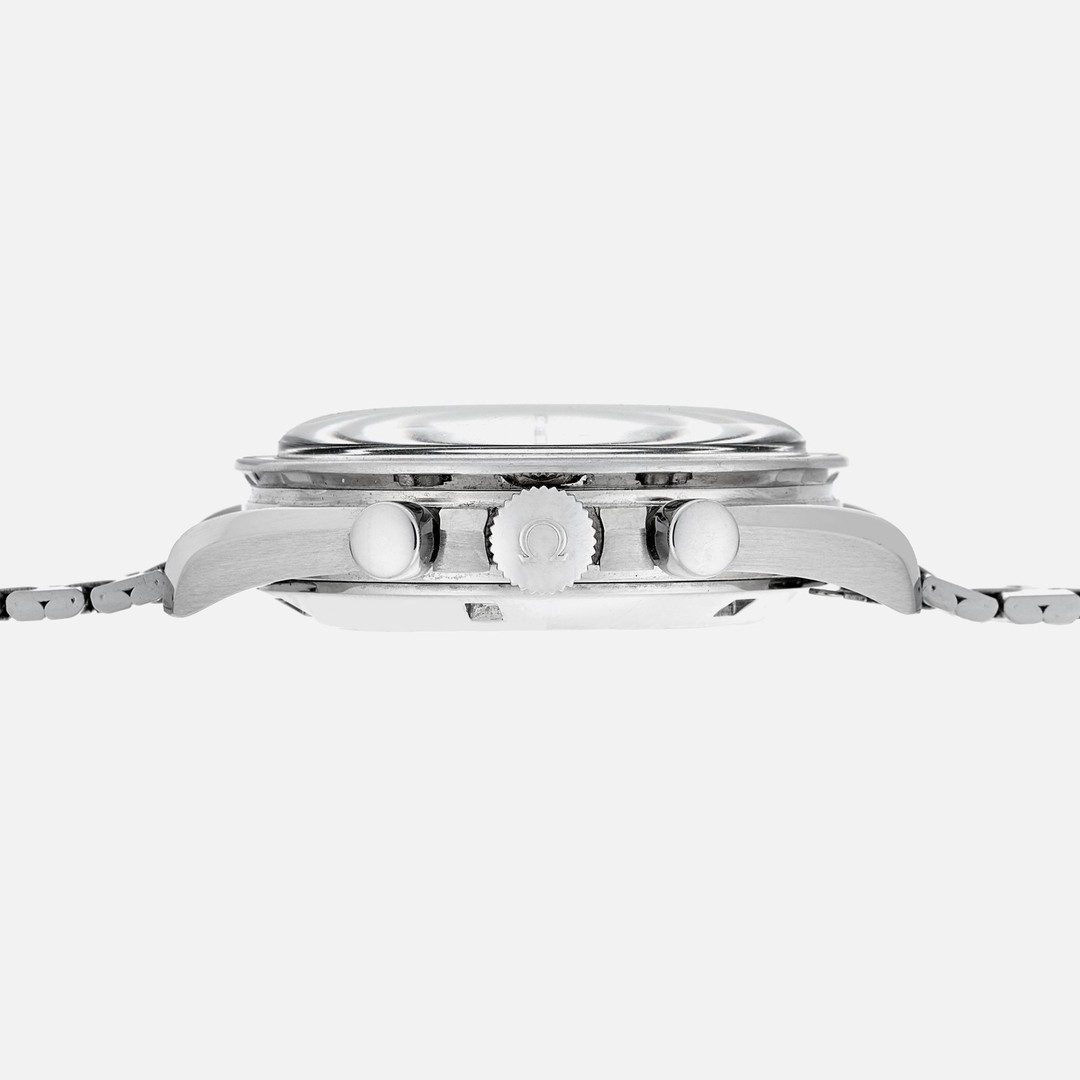
A detail that is often mixed up: those were not yet “Professional” models. The Speedmaster Professional name arrived in 1964 with the reference 105.012 and its new, larger 42 mm case with guards around the crown and pushers. The name had nothing to do with NASA, whose approval came a year later.
1969: the Moon, and a watch that vanished
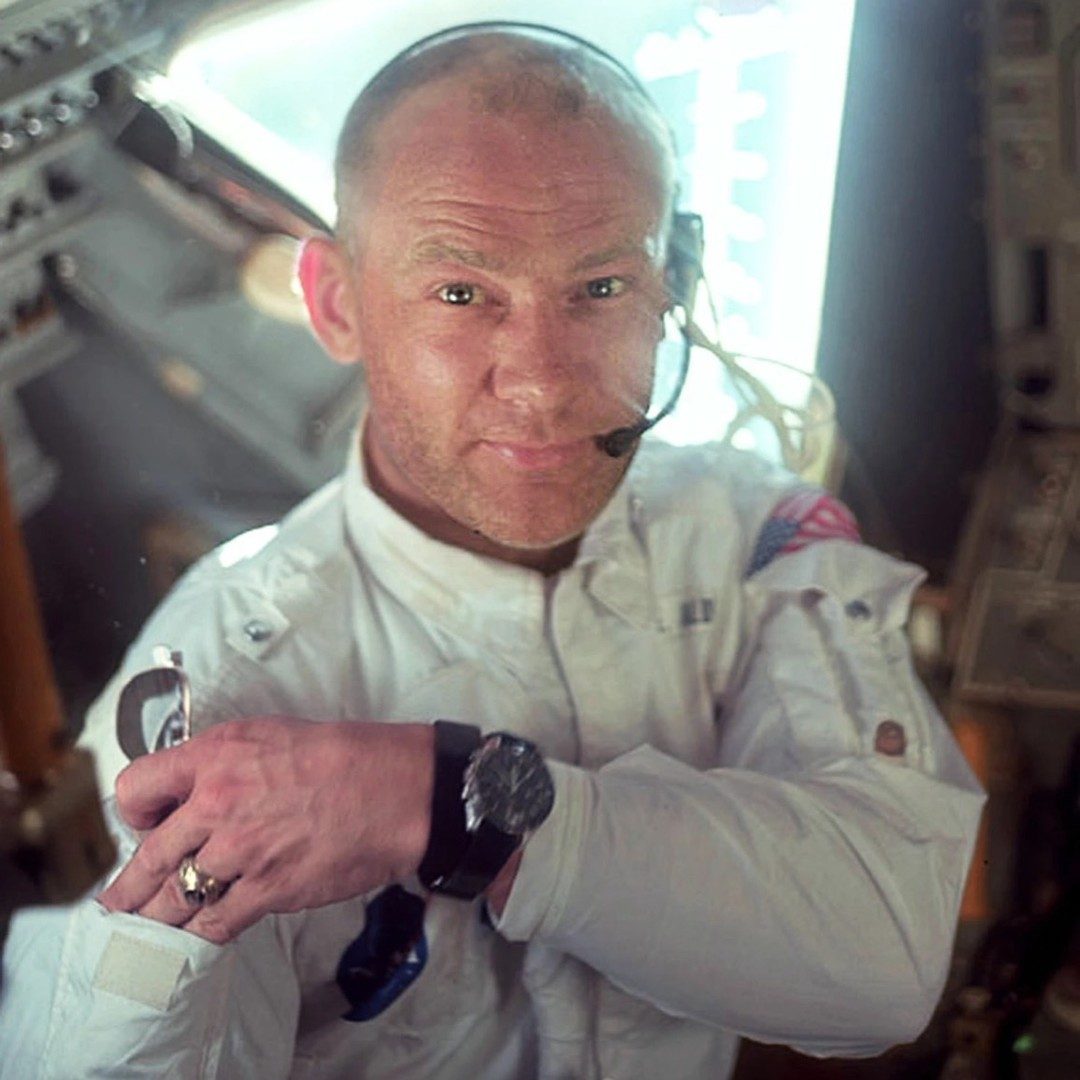
On Apollo 11, all three astronauts carried a Speedmaster Professional: Neil Armstrong and Buzz Aldrin a reference 105.012, and Michael Collins a 145.012.
Here the story has a twist. Armstrong was the first man on the Moon, but his watch probably was not the first watch. In the debriefing after the mission he explained that, with the lunar module's timer out of action, the crew had decided to leave one wristwatch inside. Aldrin later said he was sure Armstrong had not worn his on the surface. So the first watch worn on the Moon, on 21 July 1969, was Aldrin's.
And nobody knows where it is. Aldrin's Speedmaster went missing when he sent it to the Smithsonian. Armstrong's and Collins's watches are in the National Air and Space Museum today.
One more thing the legend skips. Aldrin was not sentimental about it. He called it a lousy watch to have on the surface.
1970: fourteen seconds on Apollo 13
When an oxygen tank exploded on the way to the Moon, the crew of Apollo 13 could no longer rely on their usual timers. For one of the course corrections on the way home, Jack Swigert timed a 14-second engine burn with his Speedmaster.
That is the account given by Omega and by Fratello, the specialist publication closest to the subject; we could not check it against NASA's own mission records. What is on record is the thanks: on 5 October 1970, NASA's astronauts gave Omega their Silver Snoopy Award, for contributions to flight safety.
What you can buy today
The Moonwatch never left the catalogue. It has had four movements: the calibre 321 until 1968, then the 861, the 1861 from the late 1990s and, since 2021, the calibre 3861.
Today's Speedmaster Moonwatch Professional keeps the 42 mm case, the hand-wound movement and the choice of the original-style hesalite crystal or sapphire. The 3861 adds Omega's Co-Axial escapement, a 50-hour power reserve and Master Chronometer certification.
One honest footnote. According to Omega and the Smithsonian, the Speedmaster is still the only watch NASA has qualified for spacewalks. But the current model was never put through those tests itself: Fratello points out that the last qualification dates from 1978.
Our take
Plenty of watches have a good story. The Speedmaster's is different because nobody wrote it for the watch. Omega did not design it for space, and NASA did not choose it for its name. It was simply the one still running at the end of the tests.
That is why the Moonwatch has barely changed in sixty years. The design was never the point. The proof was.
Sources
Every fact in this article comes from the sources below. Spotted a mistake? Tell us on Instagram.
- Fratello: Celebrating 60 Years Of Speedmaster NASA Flight Qualified (opens in a new tab)
- Fratello: How The Omega Speedmaster Became The Moonwatch (opens in a new tab)
- Fratello: The Three Omega Speedmaster References That Were Worn On The Moon (opens in a new tab)
- Fratello: Hands-On Watch Review: Omega Speedmaster Moonwatch: New Vs. Old (opens in a new tab)
- Fratello: Apollo 13 — A Life-Saving Fourteen-Second Burn Timed With The Omega Speedmaster Professional (opens in a new tab)
- Fratello: OMEGA 1957 Trilogy Limited Editions – Railmaster, Seamaster 300, Speedmaster'57 (opens in a new tab)
- Monochrome Watches: A Guide to the Evolution of the Omega Speedmaster Moonwatch, Reference by Reference (opens in a new tab)
- Monochrome Watches: The 2021 Omega Speedmaster Moonwatch Professional Master Chronometer (opens in a new tab)
- Omega: Space watch: the first OMEGA Speedmaster in space (1962) (opens in a new tab)
- Omega: 1965: The Speedmaster is qualified by NASA for the space program (opens in a new tab)
- Omega: OMEGA Space Legacy (opens in a new tab)
- Omega: 2015 Silver Snoopy Award - Speedmaster (opens in a new tab)
- National Air and Space Museum: Space Time Technology (opens in a new tab)
- National Air and Space Museum: Chronograph, Armstrong, Apollo 11 (opens in a new tab)
- National Air and Space Museum: Chronograph, Collins, Apollo 11 (opens in a new tab)
- NASA: Apollo 11 Lunar Surface Journal: EVA Preparations (opens in a new tab)